
Four roommates with six shared bills can end up with 18 separate "you owe me" moments every month. The way to split bills with roommates is to agree a short set of rules once, log every shared cost in one place, and settle up once a month. That turns 18 awkward chats into at most three payments.
Why 18? The maths behind the chaos
Say one person pays each of six bills. The other three owe that person a share of each one, so that is six bills times three people, or 18 small debts. Many of them point in opposite directions and cancel out.
If you add them all up at the end of the month, nobody needs to pay more than three people. In a group of four, the most payments you ever need is three. That is the whole idea behind the system below.
The rules table: what to share and how
Most arguments come from costs nobody ever labeled. Put each one in a bucket now, ideally on one page everybody has seen. Here is a sensible starting point.
| Cost | Bucket | Why |
|---|---|---|
| Electricity, gas, water | Equal | Hard to measure per person, and it averages out |
| Broadband | Equal | Everyone benefits whether or not they use it much |
| Streaming and TV | By use | Only the people who watch it pay |
| Cleaning supplies, bin bags, toilet paper | By turns | Small buys add up to the same over a year |
| Rent | By room | See how to split rent by room size |
| Furniture for common areas | Equal | One-off, and everyone sits on it |
| Personal food, parcels, a guest's takeaway | Not shared | Each person pays their own |
When to split by use instead of equally
Equal is the default because it is easy to explain and nobody has to track showers. Switch to "by use" when the difference is big and obvious, such as someone working from home all week or a bedroom with its own heater.
If you do, agree the rule in advance, for example "the home worker pays a fixed extra amount on the electricity bill." A fixed rule beats arguing about it every month. Also check your lease and your supplier, because some bills are tied to one name.
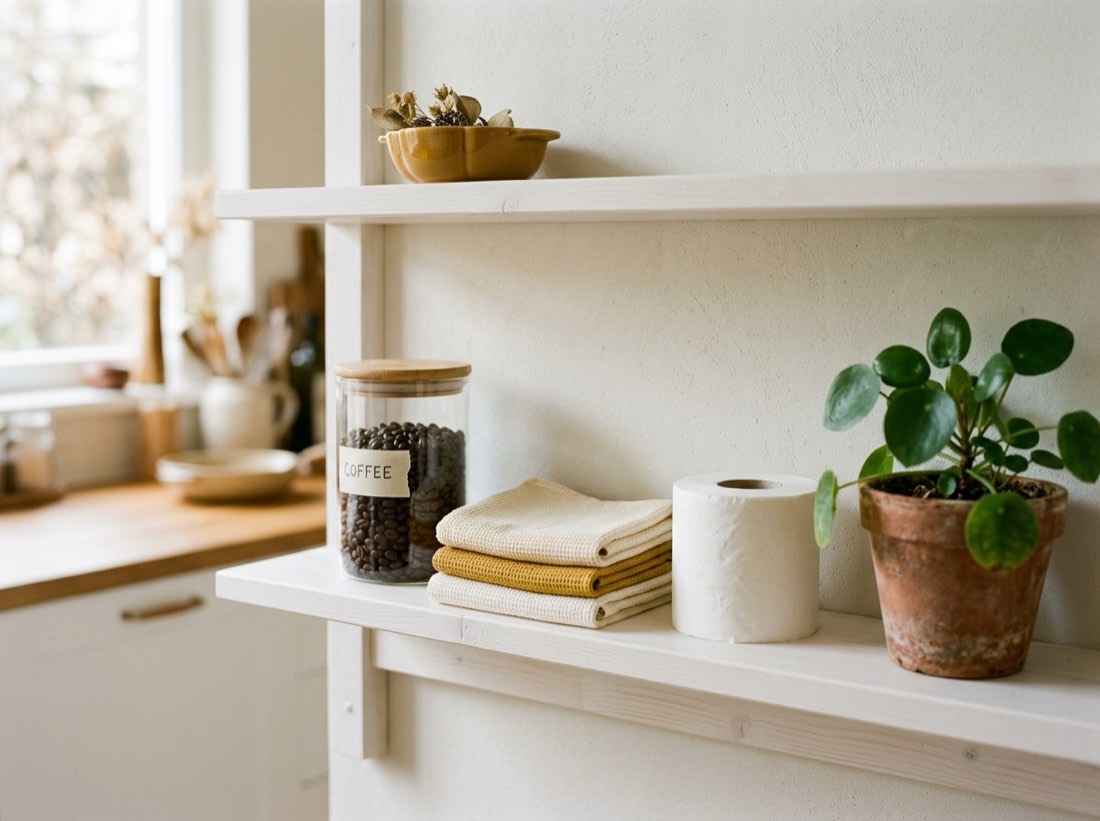
Supplies: take turns instead of splitting every receipt
Nobody wants to log a 2.50 bin bag purchase. Instead, rotate who buys the shared basics. This month it is Tom, next month it is Jess, and over a year it roughly evens out.
If one person's turns keep costing more, move those items into the equal bucket and log them. For food, pick one lane: either everyone shops for themselves, or you share a short list of basics. Our guide to splitting groceries with roommates covers that in detail.
A worked example: one month, three roommates, 2 payments
Priya, Tom and Jess share bills in pounds. Everything below is split equally, and each person's share of the £159 total is £53.
| Cost | Paid by | Amount |
|---|---|---|
| Electricity and gas | Priya | £84 |
| Broadband | Priya | £36 |
| Cleaning supplies and bin bags | Tom | £24 |
| Streaming service | Jess | £15 |
| Total | £159 |
| Person | Paid | Fair share | Result |
|---|---|---|---|
| Priya | £120 | £53 | Is owed £67 |
| Tom | £24 | £53 | Owes £29 |
| Jess | £15 | £53 | Owes £38 |
Tom pays Priya £29 and Jess pays Priya £38. That is two payments for a whole month of bills, and the money owed (£67) matches the money owing (£29 plus £38).
The monthly 10-minute routine
A system only works if it is small enough to actually do. Pick the same day each month, such as the first Sunday, and run through these steps together or in the group chat.
- Minute 1 to 3: Everyone adds any shared costs they paid and have not yet logged.
- Minute 4 to 5: Check the fixed bills are in (electricity, broadband, streaming) and that nothing is double counted.
- Minute 6 to 7: Look at the totals and see who owes whom.
- Minute 8 to 9: Pay what you owe, and the person who is owed confirms it arrived.
- Minute 10: Note any rule you want to change and whose turn it is to buy supplies.
Short and regular beats big and rare. A balance of £30 is easy to pay today, and a balance of £300 after half a year is how friendships get strained.
A message you can send to start the conversation
If you are the one proposing a system, keep it friendly and concrete. Here is a script you can copy.
Hey all, can we agree how we split the shared bills so nobody has to chase anyone? My idea: electricity, gas and broadband equal, supplies by turns, personal food separate. We log everything in one place and settle once a month. Does that work, or would you change anything?
Where Evens fits
Evens is built for exactly this kind of shared home. In a home group, monthly bills can repeat on their own, the supplies rotation tracks whose turn it is, and the group balance shows who owes whom so you can settle in your payment app. It is not released yet.
What to do when someone moves out
Settle their balance first, then split the fixed bills between the people who remain. Agree this rule at the start so a departure does not become a dispute. A new person joining can simply take their share of the equal bills from their first day.
Frequently asked questions
Should roommates split bills equally?
Usually yes for shared bills like electricity, gas and broadband, because it is simple and averages out. Split by use only when the difference is large and agreed in advance.
How do you split utilities with roommates when one person is home more?
Agree a fixed extra amount for the person who uses more, rather than measuring usage each month. If the difference is small, an equal split is fine and avoids tracking.
Who should put the bills in their name?
Whoever is happiest to be responsible for the account, though the cost is shared by everyone. Check your lease and your supplier, and keep a record of what each person owes.
How often should roommates settle up?
Once a month works well for most homes. It keeps balances small and gives you a regular moment to review the rules.
Do roommates split groceries?
Only if everyone agrees to. Many homes keep food separate and share a short list of basics such as oil, coffee or cleaning products.