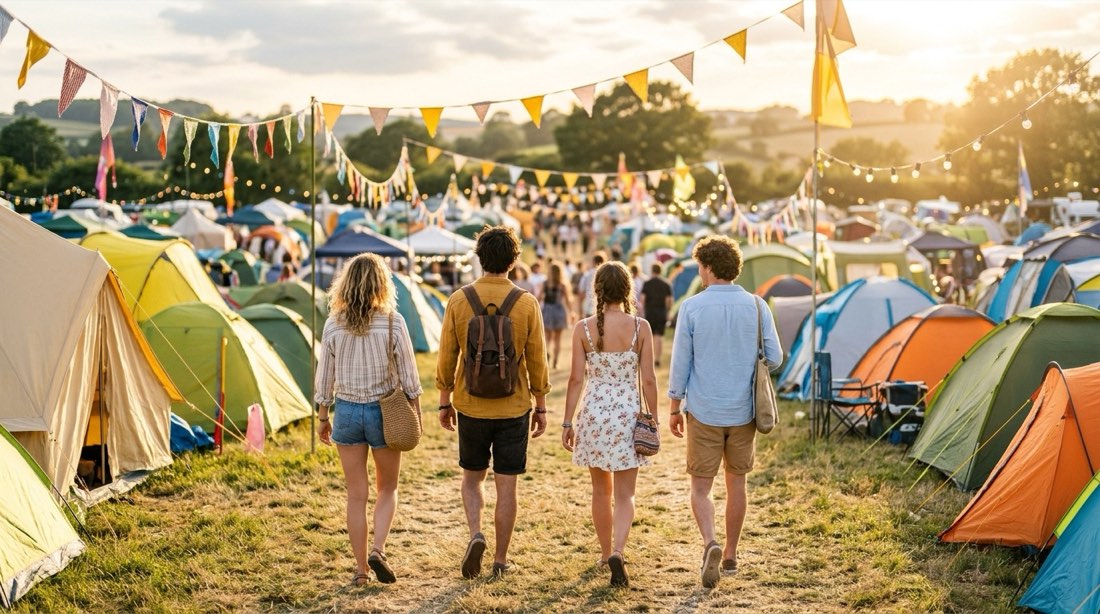
The easiest festival budget with friends has three parts: tickets paid up front, a daily spending figure everyone agrees on, and a written split for the shared gear and the car. Do that before you leave and the money stays boring, which is exactly what you want in a field.
The festival where nobody spoke on Monday
Four friends drove to a weekend festival last summer. It was glorious. The trouble started in the car park on the way home.
Priya had paid for petrol and parking. Jo had bought the tent. Callum had brought a cooler box, and Ife had paid for most of the coffees. Nobody could say who owed what, and the group chat went quiet for a week.
None of it was anyone's fault. They just never agreed a plan. Here is the one they used the next year.
Step 1: pay for tickets before anything else
Tickets are the biggest cost and the first to be sold out. Ask one person to buy them, and have everyone send their share before the booking goes through.
Ticket prices, booking fees and camping passes vary a lot between festivals, so check the festival's own site for the real numbers. If one friend might drop out, agree now who can take their place. Our guide to what to agree before booking a group trip covers that conversation in more detail.
Step 2: set a day-by-day festival budget
Festival spending feels random, but it is not. Food, drink and small extras follow the same pattern most days.
Pick a figure per person per day, and write it down. The table below is an example for four friends over a Thursday to Sunday. These are made-up numbers in pounds, so swap in your own.
| Day | Food | Drinks | Extras | Day total |
|---|---|---|---|---|
| Thursday (arrive) | £12 | £8 | £0 | £20 |
| Friday | £20 | £25 | £5 | £50 |
| Saturday | £20 | £25 | £5 | £50 |
| Sunday (leave) | £15 | £15 | £5 | £35 |
| Whole festival | £67 | £73 | £15 | £155 |
Thursday is light because you are still setting up. Friday and Saturday are the big days. Sunday is lighter because you are packing and driving home.
Decide what is "shared" and what is "yours"
A shared pot works best for the things everyone uses: the group breakfast, water, the gas for the stove. Your own pints and your own merch are your own business.
Say it out loud at the start. "Shared food is split four ways, drinks are personal." One sentence now saves a debate later.
Step 3: who carries what, and who pays for it
This is the part that causes most of the arguments. One person lugs a tent for four, and one person pays for the car, and everyone assumes it evens out. It rarely does.
The fix is to treat each shared item as a cost the whole group owes. The person who bought or brought it is simply the person who is owed. Here is the example, again for four people.
| Item | Paid by | Cost | Each person's share |
|---|---|---|---|
| Four-person tent | Jo | £120.00 | £30.00 |
| Cooler box | Callum | £30.00 | £7.50 |
| Gas stove | Ife | £24.00 | £6.00 |
| Petrol and parking | Priya | £128.00 | £32.00 |
| Total | £302.00 | £75.50 |
Everyone owes £75.50 in total. Subtract what each person already paid and you get the balances: Priya is owed £52.50, Jo is owed £44.50, Callum owes £45.50 and Ife owes £51.50.
That sounds like a lot of transfers, but it is only three. Callum pays Priya £45.50. Ife pays Priya £7.00 and Jo £44.50. If you want to know why the number of payments can be that small, see far fewer payments to settle up.

What about who keeps the tent afterwards?
Agree this before you buy. If Jo keeps the tent and uses it for years, the others may feel they paid for a gift. Common answers are that the group pays only part of the cost, or that the owner lends it to the group again next year.
There is no right answer, only a clear one. Pick it at the start and put it in the chat.
Step 4: add it all up
Now you can see the real cost per person. Using the example above, the daily spending plan is £155 and the shared gear and car is £75.50, so £230.50 per person before tickets.
That is the number to share with friends who are still deciding. Nobody likes finding out afterwards that "just a weekend" cost more than they thought.
Keeping track during the festival
Phone signal in a field is often poor, and batteries die. Keep it simple on the day.
- Pick one person per day to pay for the shared food run, and rotate.
- Snap a photo of receipts for anything shared.
- Do a quick tally on Sunday, before the drive home.
Evens is built for exactly this. You log a cost in plain words, such as "I paid 24 for the stove, all four of us", and it keeps the running balances. It is coming soon, so for now a notes app works too.
Settling up after the festival
Do it within a week, while everyone still remembers the weekend. Waiting turns a £45 favour into an awkward chase.
If you are the one waiting for money, a friendly nudge is fine. Our post on how to ask a friend to pay you back has wording you can copy. Here is a short one for a group chat.
Great weekend, everyone. I've added up the shared stuff and sent the figures above. Could you each send your bit by next Sunday? Thanks, I'll do the same for anything I owe.
Frequently asked questions
How much should I budget for a festival with friends?
Add tickets, travel, camping gear, and a daily figure for food and drink. Festival and ticket prices vary a lot, so start with the real ticket cost and build up from there.
How do you split the cost of a tent between friends?
Divide the price by the number of people who will sleep in it, or by everyone if it is shared kit. Agree beforehand who keeps it afterwards.
How should we split petrol and parking for a festival?
Add the petrol, tolls and parking, and divide by everyone in the car, including the driver. Some groups give the driver a small discount, which is fine if you agree it first.
Should we set up a shared kitty for food and drink?
A small kitty for shared food works well, as long as someone tracks it. Keep personal drinks out of the pot to avoid arguments.
When should friends pay each other back after a festival?
Within a week is a good rule. Do it while the weekend is fresh and the amounts are easy to remember.